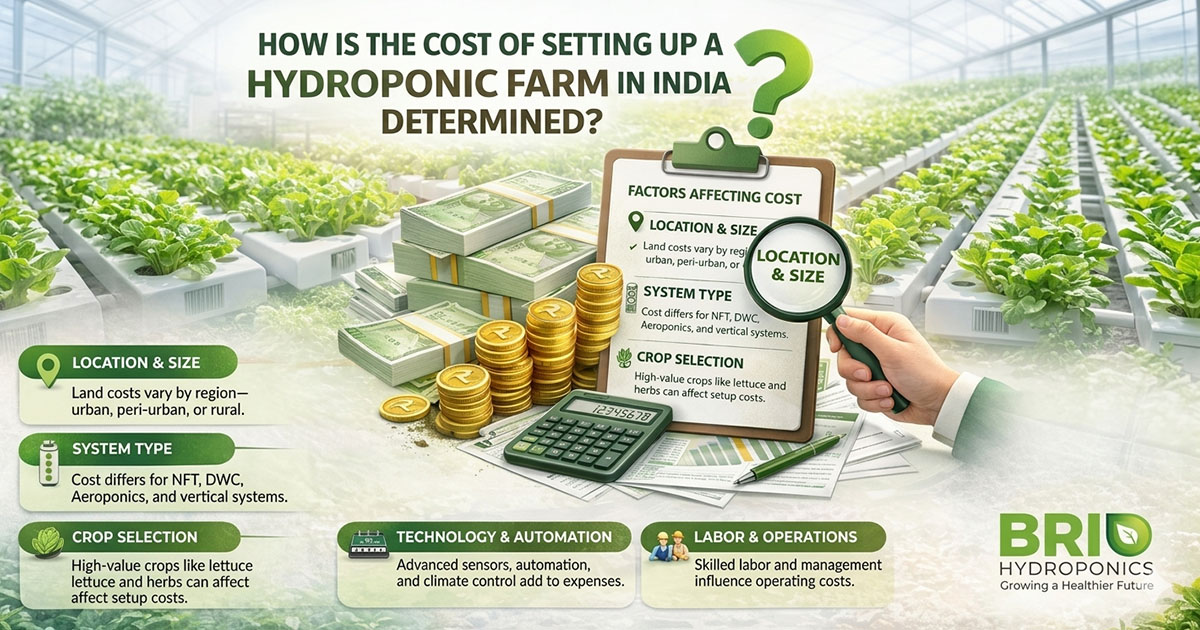
Starting a hydroponic farm involves careful planning, especially when it comes to understanding the investment. The hydroponic farming cost in India is not fixed, it depends on multiple factors such as farm size, system type, level of automation, and crop selection.
Whether you are planning a small setup or a commercial project, knowing the cost of hydroponic farm setup helps you make better financial decisions and avoid unnecessary expenses.
This guide explains the complete hydroponic setup cost breakdown in India, including all key components and factors that influence the overall investment.
Understanding Hydroponics Startup Requirements
The setup requirements for hydroponics in India can vary widely depending on the scale of the project:
- Small-scale setup suitable for home growers
- Medium-scale farms for local supply
- Large commercial farms for high-volume production
These setups typically include infrastructure, equipment, and basic operational arrangements.
Hydroponic Setup Breakdown
To understand the hydroponic setup in India, let’s look at the main components involved:
1. Structure (Greenhouse / Polyhouse)
The structure plays a major role in hydroponic farming. It usually includes:
- GI structure or polyhouse frame
- UV-stabilised plastic covering
- Shade nets
- Ventilation systems
A protected structure ensures better climate control and improves crop yield.
2. Hydroponic System Equipment
This includes the actual growing system where plants are cultivated.
Common components:
- Grow channels (NFT pipes)
- Reservoir tanks
- Pumps and plumbing
- Drip lines or water flow systems
The choice of system (NFT, DWC, drip) directly impacts efficiency and performance.
3. Growing Medium
Even though hydroponics is soil-free, a medium is used for plant support.
Common options:
- Coco peat
- Rockwool
- Clay pellets
4. Nutrient Solution
Plants require a balanced nutrient mix for proper growth.
Includes:
- Macro and micronutrients
- pH balancing solutions
5. Irrigation and Automation System
Automation improves efficiency and reduces manual effort.
Includes:
- Timers
- Sensors (pH, EC)
- Automated nutrient dosing systems
6. Lighting (If Indoor Setup)
For indoor farms, artificial lighting is required.
Includes:
- LED grow lights
- Electrical setup
Greenhouse setups usually rely on natural sunlight.
7. Labour and Installation
Setting up a hydroponic farm requires skilled labour.
Includes:
- System installation
- Plumbing and wiring
- Setup calibration
8. Seeds and Initial Plantation
High-quality seeds are essential for better yield and consistency.
Factors Affecting Hydroponic Farm Cost
Several variables influence the factors affecting hydroponic farm cost:
1. Farm Size
Larger farms require higher investment but offer better economies of scale.
2. Type of System
Different systems have different costs:
- NFT: Moderate cost
- DWC: Lower cost
- Drip system: Higher cost
3. Level of Automation
Manual systems are cheaper but require more labour. Automated systems increase initial investment but reduce operational effort.
4. Location
Costs vary depending on:
- Land price
- Climate conditions
- Availability of resources
5. Crop Selection
Leafy greens are cheaper to grow, while exotic crops may require higher investment.
6. Quality of Materials
Higher-quality materials increase cost but improve durability and long-term performance.
Investment Required for Hydroponics
The investment required for hydroponics depends on business goals:
Small Hobby Setup
- Low investment
- Suitable for home growers
Semi-Commercial Setup
- Medium investment
- Suitable for local market supply
Commercial Farming
- High investment
- Suitable for large-scale production and distribution
Planning investment properly helps in achieving better returns.
Hydroponic Farming ROI
Understanding returns is important before starting.
Revenue depends on:
- Crop type
- Market demand
- Selling strategy
- Production capacity
Advantages:
- Faster crop cycles
- Year-round production
- Consistent quality output
These factors contribute to better long-term returns.
Hydroponic Greenhouse Cost in India
A major part of the budget goes into building a controlled environment.
Hydroponic greenhouse cost in India depends on:
- Structure quality
- Size
- Climate control features
Basic polyhouses are cheaper, while advanced climate-controlled greenhouses cost more but offer better productivity.
Setup Comparison: Basic vs Advanced
|
Component |
Basic Setup |
Advanced Setup |
|
Structure |
Polyhouse |
Climate-controlled greenhouse |
|
System |
Manual NFT/DWC |
Automated system |
|
Maintenance |
Moderate |
Lower (automated) |
Tips to Optimise Hydroponic Setup Cost
To manage the hydroponics startup cost in India, consider:
- Start small and scale gradually
- Choose crops with high demand
- Use locally available materials
- Avoid over-investing in automation initially
- Focus on efficient system design
Common Mistakes to Avoid
-
Underestimating setup cost
- Ignoring maintenance expenses
- Choosing the wrong crop
- Poor nutrient management
- Lack of technical knowledge
Avoiding these mistakes helps in better financial planning.
Long-Term Cost Benefits
Even though the initial cost is high, hydroponics offers long-term savings:
- Reduced water usage
- Lower pesticide costs
- Higher productivity
- Consistent income
These benefits make hydroponics a strong long-term investment.
Conclusion
The cost of hydroponic farm setup depends on multiple factors including size, system type, infrastructure, and level of automation. Understanding the complete hydroponic setup cost breakdown in India helps in planning a successful project.
While the hydroponic farming cost in India may seem high initially, the long-term benefits, higher yield, and better profitability make it a valuable investment.
By carefully evaluating the investment required for hydroponics and focusing on efficient planning, it is possible to build a sustainable and profitable hydroponic farming business.